Why reaching underserved communities through socially impactful marketing is essential.
When we talk about multicultural marketing and community engagement, we’re talking about connecting people to resources, opportunities, and information that can change their lives.
And right now, that work matters more than ever.
Every day, my team at Wicked Bionic wrestles with questions that don’t have easy answers: How do we reach veterans living in rural communities where the nearest VA office is 60 miles away? How do we connect underresourced families to vital services when they don’t have reliable wifi? How do we build trust with Hispanic communities that have every reason to stay invisible?
They’re the daily reality of doing socially impactful work in multicultural marketing.
The Communities That Get Left Behind
There’s a gap between services that exist and people actually connecting to them. Government programs, healthcare resources, educational opportunities, and financial assistance are all there. The work is making sure people can access the information, trust the messenger, and see themselves reflected in the outreach.
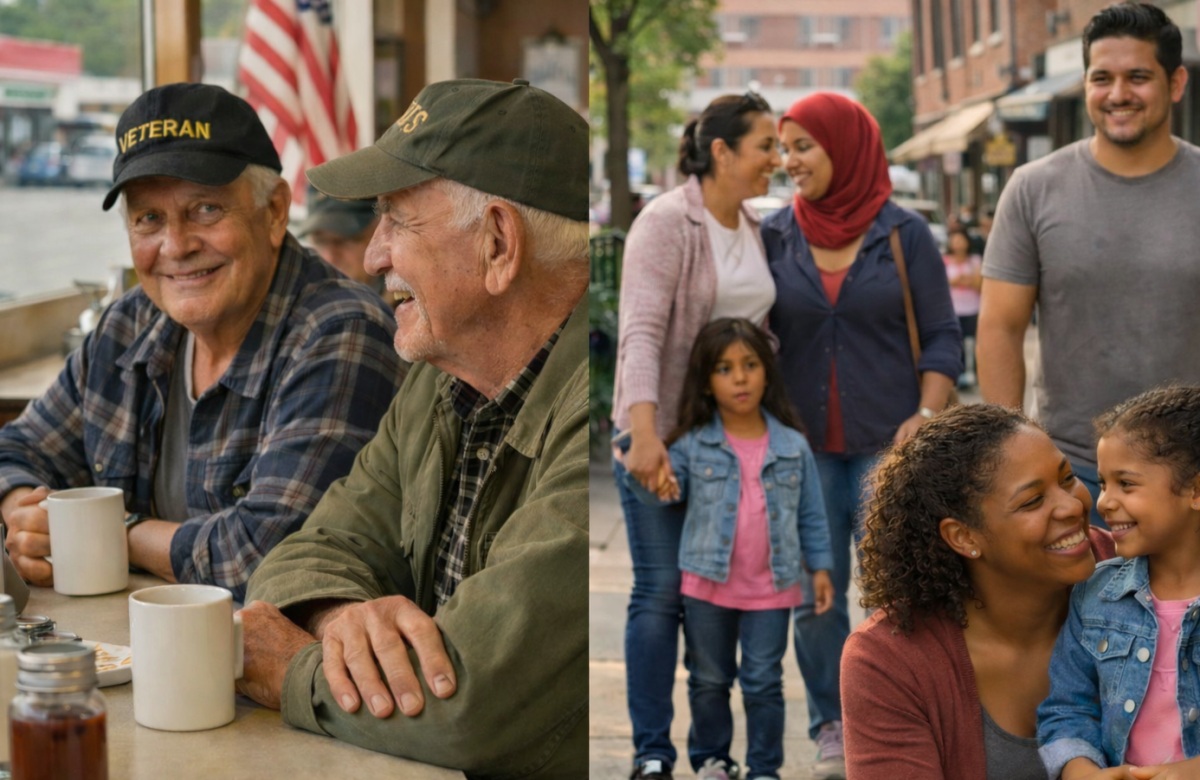
Take veterans in rural America. These are men and women who served their country, and now they’re struggling with PTSD, homelessness, unemployment, or health issues. The VA has programs that could help. But how do you reach someone in a town of 800 people where the local diner is the community hub and the internet connection is spotty at best? Our work with Oregon’s Department of Veterans Affairs taught us this firsthand: for our older veterans who didn’t grow up with smartphones and laptops, digital-only campaigns create an impossible barrier. For them, a digital-only campaign fails before it starts.
Or consider families in under-resourced urban neighborhoods where wifi access isn’t a given. Or consider families in underresourced urban neighborhoods where WiFi access isn’t a given. According to Pew Research, Americans in households earning under $30,000 annually are far less likely to have broadband access than higher-income households. When you’re working two jobs to keep the lights on, you’re not scrolling social media for information about rental assistance or job training programs. You’re surviving. The digital divide isn’t just about technology—it’s about who gets access to opportunity and who doesn’t.
And then there are the communities living in the shadows by necessity. Hispanic families navigating a climate of fear and uncertainty don’t respond to generic outreach. Trust isn’t built with translated flyers. It’s built on cultural competency, community partnerships, and an understanding of the very real barriers people face when weighing whether it’s safe to step forward.
Why Traditional Marketing Approaches Fall Short
Here’s the hard truth: most marketing campaigns aren’t designed to reach these communities. They’re designed to reach the easiest audiences—the people already online, already engaged, already trusting of institutions.
Traditional media buying focuses on impressions and reach. But what good are a million impressions if none of them land with the people who need the message most?
Community engagement requires more than translated materials. It requires understanding how information travels in different communities. In some places, it’s the radio station that’s been broadcasting in Spanish for 30 years. In others, it’s the church bulletin or the flyer at the laundromat or the conversation with the community health worker who’s earned people’s trust over time.
Cultural competency isn’t a nice-to-have. It’s everything. It’s knowing that a one-size-fits-all approach won’t work when you’re trying to connect with Vietnamese seniors who get their news from ethnic newspapers, or Black communities with justified skepticism of government programs, or Native American populations on reservations where geography itself is a barrier.
What Socially Impactful Work Looks Like
Real community engagement starts with one question: How does this community receive information?
Not how we’d like them to receive it. Not what’s most convenient for our budget or timeline. In reality, how do they receive it?
For veterans in rural communities, that might mean partnerships with VFW halls, local radio spots during morning drive time, or direct mail that doesn’t look like junk. It means meeting people where they are—literally and figuratively.
For families without reliable internet access, that means offline strategies. Bus ads. Posters in WIC offices. Presence at community events. Door-to-door outreach through trusted local organizations. The methods that worked 20 years ago still work because human connection never goes out of style.
For hard-to-reach Hispanic populations, it means bilingual campaigns developed by people who understand the culture—not just the language. It means choosing messengers carefully. Working with community-based organizations that have credibility. Creating safe spaces for engagement. Understanding that fear is a factor and designing accordingly.
This is harder than running a digital ad campaign. It takes more time, more thought, more cultural intelligence. But it’s also the only way to reach the people who need resources most.
Why This Work Matters More Now
We’re living in a time when division is loud, and trust is fragile. Communities that have historically been underserved or overlooked are even more isolated. The stakes for getting this right have never been higher.
When we connect a homeless veteran to housing resources, that’s a life changed. When we help an undocumented family access healthcare for their child, that’s dignity restored. When we inform low-income families about educational opportunities their kids qualify for, that’s generational impact.
This isn’t marketing for marketing’s sake. It’s marketing with purpose. It’s using a communication strategy to create equity, access, and opportunity.
And the agencies and organizations doing this work—government entities, nonprofits, healthcare systems, educational institutions—they need partners who understand that reaching underserved communities requires different skills, different strategies, and a genuine commitment to social impact.
The Path Forward
There’s no single solution to reaching every underserved community. But there are principles that work:
Cultural competency first. You can’t market to communities you don’t understand. Invest in expertise, relationships, and authentic partnerships with community leaders.
Meet people where they are. Don’t make communities come to you. Go to them—through the channels they trust, in the languages they speak, with messengers they know.
Think beyond digital. The internet hasn’t solved everything. Radio, print, in-person events, and trusted community networks still matter—especially for populations facing the digital divide.
Build for trust. In communities burned by broken promises, trust is earned slowly. Authenticity, consistency, and follow-through matter more than clever creative.
Measure what matters. Success isn’t just impressions and clicks. It’s people reached, lives changed, resources accessed. Keep your eye on impact, not just metrics.
The work of reaching underserved communities is hard. It’s complex. It doesn’t come with a template or a quick fix. But it’s also the most meaningful work we can do.
Because when marketing serves communities that have been left behind, it stops being just marketing. It becomes a tool for equity, justice, and change.
– By Dana C. Arnett, CEO, Wicked Bionic
Want to talk about how authentic community engagement could strengthen your next campaign? I’d love to hear what you’re working on. Reach out here or connect with me on LinkedIn.
About the Author
Dana C. Arnett is the Founder and CEO of Wicked Bionic, a Los Angeles-based multicultural communications and advertising agency. She works with government and private sector clients, specializing in marketing strategy and paid media campaigns. With over 30 years of experience in entertainment production and a decade building authentic connections between organizations and diverse communities, Dana is a recognized leader in culturally responsible marketing.